The Lift Score Explained: How Lift.Life Ranks Job-Ready Talent
June 9, 2026 · 7 min read · Lift.Life Team
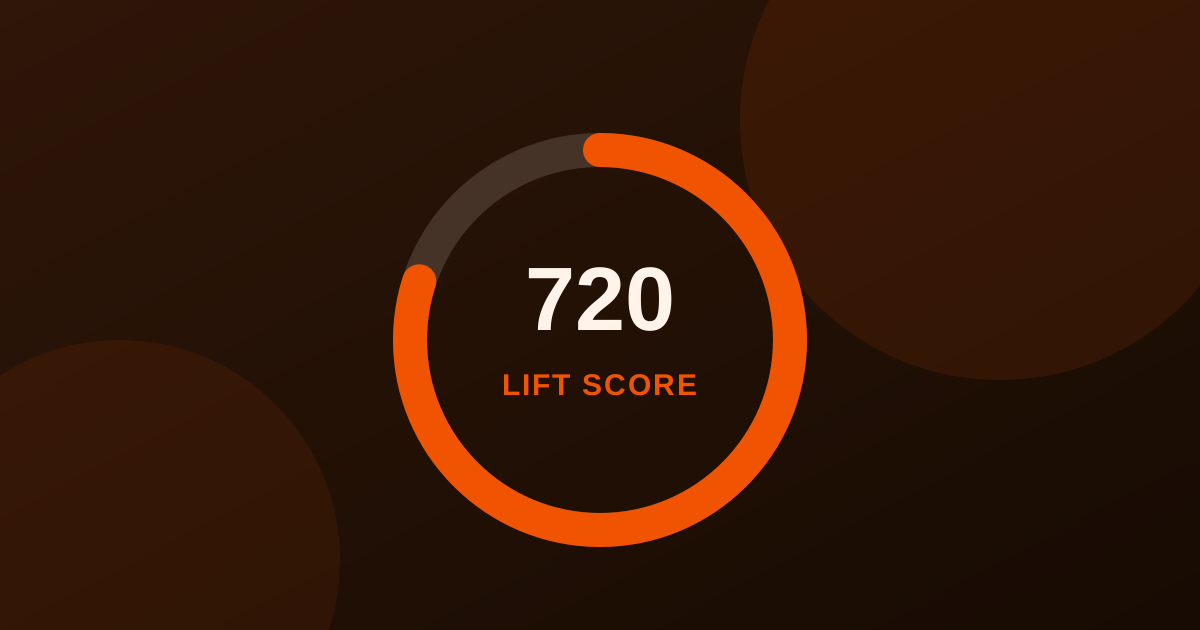
A resume tells you what someone claims. A Lift Score tells you what's actually been verified. That distinction is the entire reason the score exists — and it's why recruiters increasingly look at it before they look at anything else on a candidate's profile.
What Is a Lift Score
A Lift Score is a number out of 900 that reflects how job-ready a worker is, based on verified information rather than self-reported claims. Where a resume line says "3 years experience as an electrician," a Lift Score reflects whether that experience, and the skills behind it, have actually been checked.
It's designed to answer the one question every employer actually cares about: if I hire this person tomorrow, can they do the job? A high score means more of that question has already been answered before the interview even happens.
Why Resumes Alone Fall Short
For blue and grey collar hiring especially, resumes are a weak signal. Two candidates can list the identical skill — "machine operation," "patient care," "two-wheeler delivery" — and have wildly different real-world competence. There's no built-in way for an employer to tell them apart without a lengthy trial period or a personal reference.
A Lift Score exists to close that gap. It replaces "trust me" with "here's what's been checked."
The Building Blocks Behind the 900 Points
Lift.Life doesn't publish an exact point-by-point breakdown, since the weighting adapts by profession. But broadly, your score is built from four categories:
- •Verified skills. Practical skill checks and assessments relevant to your trade.
- •Experience and work history. Confirmed employment details, tenure, and role responsibilities.
- •Reliability signals. Indicators like consistency, communication, and track record.
- •Learning and certifications. Completed training and credentials tied to verifiable outcomes.
Think of your Lift Score less like a single test result and more like a running verified transcript of your working life — it grows as more of what you can do gets checked and confirmed.
What a "Good" Score Actually Means
Rather than forcing recruiters to interpret a raw number, Lift.Life groups scores into readiness bands — for example, a score in the 700s is typically shown as "Good," giving both the worker and the employer an instant, plain-language read on where things stand.
How to Improve Your Score
- •Complete verified skill checks relevant to your trade as they become available in the app.
- •Keep your work history and current role updated.
- •Take relevant micro-quizzes, which double as quick skill verification.
- •Fill out your profile completely — an incomplete profile caps your score.
Why Recruiters Trust It More Than a Resume
For a recruiter shortlisting candidates by the dozen, a Lift Score does the pre-screening work that would otherwise take a phone call or a trial shift. It's not a replacement for an interview, but it changes what that interview is for.
Frequently Asked Questions
Is a Lift Score the same as a credit score?
No. A credit score measures financial risk. A Lift Score measures job-readiness — how much of your skill, experience and reliability has actually been verified.
Can my Lift Score go down?
Your score reflects your current verified profile. If information becomes outdated, such as an expired certification, your score can adjust to reflect that.
Is it free to build a Lift Score?
Yes. Building your profile and completing verification steps on Lift.Life is free for workers.
Find Out Your Lift Score in Minutes
Build your verified profile free and see exactly where you stand.
Check My Lift Score — Free